
Share

Human Rights Voices
While the UN devotes its human rights operations to the demonization of the democratic state of Israel above all others and condemns the United States more often than the vast majority of non-democracies around the world, the voices of real victims around the world must be heard.
U.N. Obsession with Condemning
Israel Instead
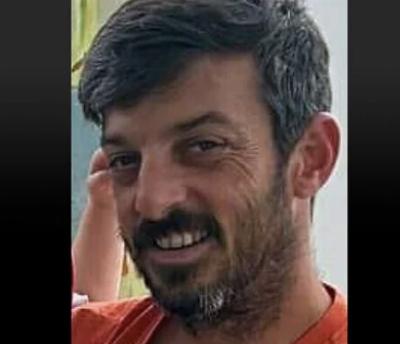
David Cunio was abducted from Kibbutz Nir Oz on October 7, 2023 (Courtesy)
Palestinian Authority/Gaza, January 14, 2026
Former Hamas hostage David Cunio recounts 738 days of captivity, abuse and survival
Original source
David Cunio, one of the Israelis abducted by Hamas terrorists on Oct. 7, 2023, gives a harrowing account of his nearly two years in Hamas captivity in Gaza, describing starvation, psychological torment, underground imprisonment and the struggle to survive for the sake of his family.
In an interview aired on Channel 12 on Monday, Cunio detailed his abduction alongside his wife, Sharon, their twin daughters Yuli and Emma, and other family members, as well as the brutal conditions he endured during 738 days in Hamas captivity.
The ordeal began in the early hours of Oct. 7, 2023, when air sirens and gunfire woke the family in their home in Kibbutz Nir Oz. Hamas terrorists stormed the kibbutz, setting houses on fire and killing and abducting residents.
While the rest of the extended Cunio family was fighting for their lives in nearby houses (David’s brothers Eitan and Ariel would be kidnapped separately), David tried to shield his family inside their safe room from the smoke and flames, but when breathing became impossible, he attempted to escape with one of his daughters out the window. They were captured in the yard.
According to Channel 12, David and his family were separated in the chaos and violence. He and his wife and one daughter, Yuli, whom he had tried to escape with, found themselves placed in a vehicle with other kibbutz residents.
They witnessed a Hamas convoy hit by fire from an Israeli helicopter en route to Gaza, killing another hostage, Efrat Katz. They were wounded by shrapnel.
For the first days of captivity, David was held with Sharon and Yuli. David described the anguish of not knowing whether Emma was alive.
“We were completely devastated by the thought that Emma wasn’t with us,” he told Channel 12. His wife kept blaming herself for Emma’s disappearance.
On the 10th day of the war, the building where they were held was bombed and David, Sharon and Yuli were taken to Nasser Hospital in Khan Yunis, disguised to blend in with the local population. There, they were reunited with Emma, who was severely neglected, malnourished and traumatized. Hamas attempted to film the family for propaganda purposes.
David said Emma initially did not recognize them. Only after Sharon sang to her did she calm down. Emma later talked of violent scenes she had witnessed, of a “man covered in red.” She would scream at night from the nightmares.
“The terrorists would shout at us to silence her,” David recalled. “How do you silence a 3-year-old who is screaming in terror?”
On the 49th day of captivity, David was separated from his wife and daughters when they were released as part of a ceasefire deal in November 2023. Sharon and the twins spent a total of 52 days in captivity. David remained behind.
“A rock lifted from my heart. When they left, I told myself I just had to survive,” he told Channel 12. “But after that, it only got worse.”
David could not know he would be held for another 682 days.
He was moved underground, into Hamas’s tunnel network, where he spent most of his captivity. He described extreme hunger, dehydration and physical exhaustion, often surviving on as little as half a pita and 250 milliliters of water per day. “It’s total darkness,” he said. “You hear people’s stomachs. People faint. You get dizzy just from standing up.”
David told Channel 12 that he was moved repeatedly through tunnels, sometimes crawling for hours through narrow passageways. In one forced march, hostages walked nearly 20 kilometers underground in a single day, bleeding and collapsing from exhaustion, he recalled.
During his captivity, David encountered other hostages, including friends and kibbutz members, many of whom later died. He described seeing elderly captives in skeletal condition and reuniting briefly with close friends before being separated again. The psychological toll, he said, was relentless.
David also described systematic psychological abuse. Hamas captors repeatedly lied to him about his wife, telling him she had “moved on” and stopped fighting for his release. Over time, he said, the lies began to penetrate. “As unreal as it sounds, that’s where it sounds most real,” he said. “You start thinking maybe she can’t wait forever, maybe she should go on with her life.”
He said these manipulations led him to moments of despair and suicidal thoughts, though fellow captives helped keep him going. He clung to small items—a rubber band belonging to his daughters, handmade necklaces he had made for them from date pits—as emotional anchors, praying daily and imagining speaking to his wife and children.
Footage later recovered by the Israel Defense Forces showed David being forced to beg for his life in a Hamas propaganda video, wearing the same rubber band that helped sustain him.
In early 2025, a new deal was reached, and some hostages were released. David was again left behind, forced to say goodbye on camera as others were freed. “We were really crying,” he said. “We were happy for them, but we knew that if the next stage didn’t happen, we were dead.”
Fighting soon resumed, and conditions deteriorated further. David said captors withheld any news about his family and their advocacy efforts on his behalf, deepening his isolation.
Finally, in Oct. 2025, David was informed that a deal had been signed and that he was going home. In a hangar shortly before release, he was reunited with his brother Ariel. Only during a video call after their release did they learn that all immediate family members had survived.
Reuniting with his daughters after two years was overwhelming, David said. “I got down on my knees, and they ran to me,” he told Channel 12. “I couldn’t believe how much they’d grown.”
Now home, David says the real work of recovery has begun. He described physical symptoms of trauma, emotional crashes after the initial reunion and the challenge of rebuilding family life. Still, he emphasized moments of joy as his daughters slowly regain trust in him.
“It’s not easy to come back from captivity and rebuild a family,” David said. “But little by little, things start to work out. And it’s fun. It’s fun that they want me next to them.”
David hopes to build a new home with his family in a new kibbutz and to give his daughters the childhood that was so violently interrupted.
- © Copyright 2012-2026, Human Rights Voices and respective authors. All Rights Reserved.
-

Source: