
Share

Human Rights Voices
While the UN devotes its human rights operations to the demonization of the democratic state of Israel above all others and condemns the United States more often than the vast majority of non-democracies around the world, the voices of real victims around the world must be heard.
U.N. Obsession with Condemning
Israel Instead
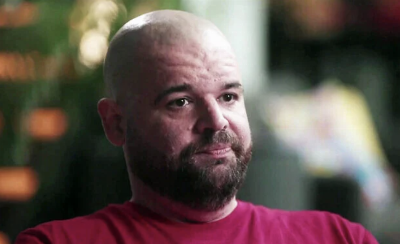
Eitan Horn speaks to Channel 12 in an interview that aired on January 18, 2026. (Channel 12 screenshot)
Palestinian Authority/Gaza, January 19, 2026
Ex-hostage Eitan Horn says captors used relationship with brother for mental abuse
Original source
Freed hostage Eitan Horn, in an interview that aired Sunday, described what he endured during his 738 days in Hamas captivity, including the traumatic moment when his brother was released while he remained in Gaza.
Eitan and his brother Iair were kidnapped from Kibbutz Nir Oz during the Hamas-led invasion and massacre on October 7, 2023, leaving behind a third brother, Amos. All three had immigrated to Israel from Argentina. Iair was freed in February as part of a previous ceasefire, while Eitan was freed under an October ceasefire deal.
Eitan told Channel 12 that for the first two weeks of captivity, the brothers were held separately; Eitan was in a group of hostages including women and children, while Iair was with men and soldiers. They knew nothing about each other’s fate until suddenly they ran into one another.
“I saw him from afar. We looked at each other and very quickly understood that we weren’t allowed to say we were brothers,” Eitan said, fearing their relation could be used against them by their captors.
“We didn’t open our mouths. We just continued. He saw me, he calmed down, and that gave us strength to keep going,” he said.
After about 50 days, when many of the women and children were released in an initial ceasefire, the brothers were reunited, becoming the only pair of brothers in captivity to be held together.
Iair also said he used humor to try to keep up their spirits. “Between us, with the group, even sometimes with them — with the captors, the terrorists.”
“Before each shower, and also after, he would ask me if I remembered to put soap on my belly button and clean it,” Eitan recalled. “It gave me a smile, and it’s a silly thing.”
“We could joke, but the few times I tried to really laugh, to laugh out loud, it was impossible,” Iair added. “I don’t know, maybe the lack of oxygen, or I don’t know what. The laughter just didn’t come out.”
Eitan said that the brothers’ terrorist captors used their relationship to psychologically torture them: “It was a card for them — to continue the mental abuse all the time. To humiliate us, [saying things like] shall we leave me there and let Iair go? Or to execute him and not me?”
Eitan also described enduring forms of humiliation to convince the terrorists to provide the hostages with more food, which was dangerously scarce. Eitan said he “let [the terrorists] laugh at me for being smelly, for being stupid, dancing for them. But if afterward we got two more dates [to eat] — then I did my part.”
On one occasion, the captors forced the brothers and fellow hostages to walk for 12 hours through tunnel networks.
“And it was after two months in which we ate a pita and a half a day,” Eitan recalled. “The tunnel was very narrow. And there were quite a few sections where the tunnel was half a meter high.”
“Or Iair would drag me along the floor, because I couldn’t walk anymore. And David [Cunio] pushed me from behind. And Ofer [Calderon] encouraged me, ‘yalla, you can do it, yalla, you can do it,'” Eitan said.
“I’ve been in tunnels for two years,” Eitan said, “without sun, without air, without night or day, without smells, without hearing birds. To be there for two years like we were, with everything we went through — no one will ever understand that.”
Ahead of Iair’s release, a Hamas commander entered their tunnel and told them that two hostages from their group of about four would be released under the ceasefire deal, tauntingly asking them, “Who do you think deserves to go out?”
“Despite the mental abuse, as a group, we never abandoned our principles. None of us named ourselves among the two who should leave. Then, after a week, comes the happiest moment in these two years — they announce that Iair is going home. That he’s saved,” Eitan said, tearfully reflecting on the moment.
“And now I can be calmer, because I don’t have to worry about my brother,” he said. “But I know that for Iair, the real nightmare is just beginning.
“He’s been saved but he’s leaving me there, and he knows very well in what state he’s leaving me, in whose hands he’s leaving me. What he’ll have to go through, to fight to make sure his little brother doesn’t die there, on the inside.”
For his part, Iair said: “It was the worst day for me. Of all 738 days.”
Eitan recalled speaking to his captors about the internal turmoil in Israel over the hostages, as mass protests demanded that the three-stage ceasefire deal be seen through, until all the captives were returned. Despite the demonstrations, the truce collapsed after stage one.
“All those comments, about ‘first we finish off Hamas, after that we’ll deal with the hostages – in the meantime, it’s not urgent – if the Hamas leaders had believed that, then that very second they would have come in and killed us,” he said.
“Fortunately for us, the nation took to the streets and protested, those who wanted us home, and that’s what kept us alive, because Hamas understood that the nation of Israel cares about the hostages, and they want them alive,” he said. “Did it raise the price [to get us back], did it not raise the price – it’s what kept us alive.”
The ex-hostage said the captors remarked on “what a special and strong nation we have. That they take to the streets, that they’re making noise.”
Horn was finally released and reunited with his brothers on October 13, as part of phase one of US President Donald Trump’s plan to end the war in Gaza.
“I did the Hamas diet and lost 64 kilos” (141 pounds),” Eitan told the Channel 12 interviewer, noting that “over two years I didn’t really move my body.”
“So now that I’m talking to you, my back hurts to levels that no one can imagine, but okay, I’ve been through worse things,” he said, adding he has a long way to go in his rehabilitation process.
- © Copyright 2012-2026, Human Rights Voices and respective authors. All Rights Reserved.
-

Source: