
Share

Human Rights Voices
While the UN devotes its human rights operations to the demonization of the democratic state of Israel above all others and condemns the United States more often than the vast majority of non-democracies around the world, the voices of real victims around the world must be heard.
U.N. Obsession with Condemning
Israel Instead
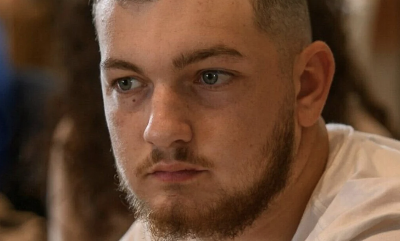
Bar Kuperstein (Courtesy)
Palestinian Authority/Gaza, October 13, 2026
‘Hamas beat us day after day’: A survivor’s story of 738 days in captivity
Original source
Twenty-four-year-old Bar Kupershtein is disarmingly matter-of-fact when he speaks of October 13 2025 – the day he was released after 738 days in Hamas captivity.
“It was amazing. The best day,” he says, smiling.
Over the past year, Kupershtein has travelled the world recounting his time in captivity. He has met Donald Trump at the White House (“It was nice,” he says of his time with the president. “He’s a funny guy”) and spoken at Tel Aviv’s Hostages Square, leaving audiences dumbstruck as he describes the horrors he endured.
Yet despite what he has survived, when we meet he seems much like any other 20-something young man. In a graphic T-shirt and white jeans, he tells me that the previous day he and his younger brother had visited Big Ben and Leicester Square – the kind of tourist rituals familiar to any curious traveller seeing England for the first time. “After this experience, I appreciate everything in my life more,” he explains.
Though Kupershtein is rather stoic in his retellings, there’s no doubt that his release – just one year ago – was deeply emotional: videos of his reunion with his family went viral at the time, showing tightly wrapped embraces and wails of grief and joy. But it wasn’t all about him, Kupershtein contends: his father, Tal, a volunteer paramedic for United Hatzalah, Israel’s largest volunteer emergency medical service organisation, had lost his ability to walk in a horrific motorcycle crash in 2019. “He wanted to stand and greet me when I was released,” Kupershtein explains, “and that’s exactly what he did. I was shocked; we all cried with excitement.”
Kupershtein was among the last of the 251 Israeli hostages taken by Hamas on October 7 2023 to be released alive, and his was an especially moving story that made headlines around the world.
After his father’s accident, Kupershtein – just 16 at the time and the eldest of five siblings – became the family’s sole financial provider. After leaving school, he worked first at the family’s falafel stand before joining the Israel Defense Forces (IDF), working weekends as a security guard to bolster his income. That path would ultimately lead him to the Nova music festival on Oct 7, where he was overseeing security.
Kupershtein, not the party type himself, said that although at first he didn’t like the “boom boom” electronic music, the convivial atmosphere at Nova grew on him. But he’d barely had time to discover he was enjoying himself before it all came to an explosive halt just after 6am on that horrifying day.
“My phone started pinging in my pocket. I didn’t even read the messages, I could already feel that something was wrong. I went outside, looked at the sky and saw rockets. I immediately understood Hamas was attacking Israel.”
Kupershtein kicked into action mode. As terrorists began cutting off exits to the festival, he convinced the police chief to open the emergency exit – a move that saved more than 2,000 festival goers.
“People were driving, running, panicking. Many were injured. One ambulance arrived at the festival to help but it got stuck, and the next ambulance we called never came. So I took matters into my own hands. I was a medic in the army, and I had an ATV [all-terrain vehicle]. I realised I could save these people myself.” Selflessness and duty are evidently Kupershtein family traits – his parents fell in love in the back of an ambulance during shifts as volunteer paramedics.
“I went back and forth to the exit a couple of times with injured people, but the last time I went back to the festival site, it was on fire. The terrorists had arrived. They shot RPGs [rocket-propelled grenades] and killed all the police officers in their cars. I started to run.”
With bullets raining down on him, Kupershtein crawled through brush at the side of the road. “The whole time I was thinking, ‘My army is going to win and everything will be OK.’ After 40 minutes, it quietened down and I figured the Israeli forces had arrived. But then I heard ‘Allahu Akbar’ and something inside me broke.
“I couldn’t understand how the terrorists could win. It was terrible. Then the shooting started again, and Hamas murdered more people. I remember the screaming, the sound of gunshots, then silence.”
Realising he would be next, he hid his security gear in the brush so Hamas wouldn’t shoot him on sight. When the terrorists finally found him, they threw him and another hostage into the back of a Toyota with Palestinian plates and crossed the border. It was the start of two years that would completely transform his life.
“For the first month we were in an apartment, and after the [first hostage release] deal we went down into a tunnel where we never saw daylight. The space was about 4.5m wide for six people.
Describing the deplorable conditions, he continues: “We slept on the floor on a thin mattress and dug a hole for a toilet beside it. We showered once a month. The drinking water wasn’t clean. We’d be given rice for lunch, and half a pitta each with cheese for dinner – sometimes there’d be maggots on it. I lost 65lb,” he says, pulling out his iPhone to show me a photo of himself from just two weeks before the attack. “A bit chubby,” he chuckles.
For the majority of 738 days, Kupershtein was held underground with five other hostages, only one of whom he had met, just a few days before the festival. He says the terrorists would update them on negotiations, but weren’t truthful: “They’d say, ‘Your government doesn’t want you. They want to kill you.’” The terrorists also made the hostages film propaganda videos, the aim being to for them to be picked up by Israeli broadcasters. Once, they demanded Kupershtein dig his own grave on camera – he refused. Other times, “they’d tell us to say things on camera like, ‘Thank you, Hamas, you’re actually OK.’ I said whatever they wanted me to so that my family could see I was alive.”
Kupershtein says he and his fellow hostages had an unexpected link to the outside world via a radio in the tunnels. “We’d feel hopeful when a release deal was proposed, then it would fall through. Our hopes were up and down all the time.”
When the second release deal fell through in early 2025, the situation became even more dire. “It was a really hard time for us. Hamas came day after day and beat us, until one day, they took Yosef [Chaim Ohana] and I to a room and blindfolded us. They hit me in the face, I fell down, and they pulled me to another room by my leg. I felt them tie my legs. I thought they were about to cut one of them off.” A half-hour beating ensued. Kupershtein couldn’t stand properly for a month.
Despite enduring what he calls “hell”, Kupershtein says the weekly kiddush [a ceremonial blessing over wine] he and the other hostages would do together kept their spirits alive. “We didn’t have wine, but we had salty water they’d give us. We dreamt about challah bread. This made us feel like we were home; the connection between us all was really nice, and we’d all sing prayers.”
This camaraderie played no small role in sustaining the men, up until Oct 13 last year. “The terrorists showed us news about a hostage deal on TV; the Israeli government had accepted. The other hostages and I looked at each other with cautious hope. After so many failed negotiations, we didn’t believe it would happen.”
But it was real. After 738 days in Hamas captivity, during which he rarely saw daylight, Kupershtein was marched by Hamas fighters through the tunnels and handed, alongside 19 other surviving hostages taken on Oct 7, to the Red Cross. The Israeli army then took him to change his clothes, shower and be reunited with his family.
When he was in hospital recovering, Kupershtein says he still had no idea that opening the emergency exit had saved 2,000 people on that fateful day. The police chief he had convinced came to visit him and told him about the impact he’d had. Even now, as we speak, he’s still learning about lives that he saved: “I was telling my story at the Nova Exhibition [a commemoration of the 378 killed and the 44 taken hostage at the festival], and opened it up to the audience for questions. A guy stood up, and he said, ‘I was one of those 2,000 people – I didn’t know it was you who saved us until tonight.’” In his typically understated way Kupershtein summarises the feeling: “It was crazy.”
Processing what he endured will no doubt be a lifelong endeavour, but right now, Kupershtein is focusing on the basics. “I can open my fridge and eat whatever I want, and if it’s empty I can order more. In the beginning I’d take five showers a day. It’s funny, the small things [are what feel most valuable].” And when he’s not spending time with friends and family, he’s travelling the world telling his story: “The last 20 hostages, we all went to Brazil together a couple of months ago. We even have a WhatsApp group. But the chat isn’t sad; it’s banter. We understand each other and what we’ve all been through.”
- © Copyright 2012-2026, Human Rights Voices and respective authors. All Rights Reserved.
-

Source: https://hrvoices.org/victim-voices/hamas-beat-us-day-after-day-a-survivors-story-of-738-days-in-captivity/?view=print