
Share

Human Rights Voices
While the UN devotes its human rights operations to the demonization of the democratic state of Israel above all others and condemns the United States more often than the vast majority of non-democracies around the world, the voices of real victims around the world must be heard.
U.N. Inaction on Lebanon
All Actions of the UN Human Rights System Critical of Specific States, 2026
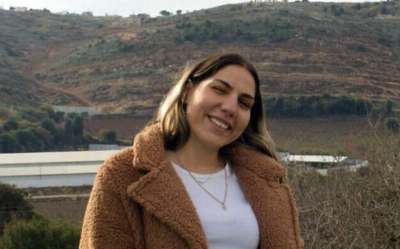
Nuriel Dubin (Courtesy of the family)
Lebanon, March 24, 2026
Woman killed, 2 injured in Hezbollah rocket attack on northern Israel
Original source
A woman was killed Tuesday evening in a Hezbollah rocket attack on the Galilee, as both Iran and its Lebanese terror proxy bombarded northern Israel.
Hezbollah launched a barrage of some 30 rockets toward the Rosh Pina area, and fired drones that triggered sirens throughout the north, as it continued to mount near-constant attacks amid intensifying fighting and Israeli airstrikes in Lebanon.
The woman, named later as Nuriel Dubin, 27, was critically injured by a rocket impact near the Mahanayim Junction, and the Magen David Adom (MDA) ambulance service said its medics declared her death at the scene.
Two others who were lightly hurt by shrapnel were treated as well.
“We arrived at a difficult scene. In a ditch on the side of the road, we saw a woman unconscious with severe shrapnel injuries,” said MDA medic Oren Ne’eman.
“We performed medical assessments, but she had no vital signs, and we were forced to pronounce her dead at the scene,” he said.
Another man with a head injury then approached the medics, Ne’eman said. “He told us that while he had pulled over to the side of the road during the siren, a missile fell nearby and he was injured by shrapnel.”
The municipality of Margaliot in the Upper Galilee said in a statement that resident Dubin is survived by her parents, Yoram and Shoshana, her brother Aviram, her sister Sapir and her fiancé Yadid.
Nuriel and Yadid had gotten engaged in September 2025, and were planning a wedding for September 2026.
Dubin worked as a youth counselor and a preschool caregiver and also served as a combat soldier in the reserves, the municipality said.
A short while after that deadly incident, Iran fired a ballistic missile salvo that triggered alerts across northern Israel, one of at least 12 volleys fired at the Jewish state on Tuesday.
One missile impacted in the city of Safed, with MDA saying it treated two people who were hurt by glass shards and who did not require hospitalization.
Earlier in the day, Defense Minister Israel Katz said Israel would maintain control of a “security zone” in southern Lebanon, up to the Litani River, until the threat of Hezbollah is removed.
On Monday, Finance Minister Bezalel Smotrich suggested Israel go further and move its border with Lebanon up to the Litani River.
Israel ran a costly occupation of Lebanon’s south from 1982 to 2000.
The IDF has been regularly striking what it says is a range of Hezbollah targets throughout Lebanon, including in the Shiite group’s stronghold in southern Beirut.
One such strike on the capital on Monday by the Israeli Navy killed a member of the Quds Force, the extraterritorial arm of Iran’s Islamic Revolutionary Guard Corps, the military said Tuesday.
The IDF said Muhammad Ali Kourani had been “advancing terror attacks directed by Iranian intelligence officials.”
The strike was carried out by the Navy following intelligence provided by the Shin Bet security agency, the military added.
The IDF also said Tuesday that five Hezbollah anti-tank missile operatives had been killed in an Israeli strike in the southern Lebanese village of Bint Jbeil earlier in the week.
The army says it struck two command centers in the village that had been used by Hezbollah’s anti-tank unit, amid operations by troops of the 91st “Galilee” Regional Division in the area.
In one of the strikes, five members of the Hezbollah anti-tank unit were killed, the army said.
In additional strikes on Monday night, the military said, it struck several more Hezbollah sites in the area, including anti-tank missile launch posts.
Since it resumed its attacks on March 2, Hezbollah has been firing an average of about 150 rockets per day, according to the IDF. Roughly two-thirds of the daily rocket fire has been directed at Israeli forces operating in southern Lebanon and along the border, with the remaining third aimed at Israel.
The Israeli military has said that it has killed around 600 Hezbollah operatives, including over 220 members of the terror group’s elite Radwan Force, since then.
More than 2,000 Hezbollah targets in Lebanon have also been struck, including 120 command centers, 100 weapon depots and 130 missile launchers, according to the IDF.
The IDF believes Hezbollah still possesses thousands of short-range rockets, along with hundreds of longer-range projectiles. The IDF has said that Hezbollah is launching most of its attacks from deeper within southern Lebanon, and not from close to the border.
More than 400 ballistic missiles have been launched from Iran at Israel since the start of the war on February 28, with the military reporting an interception rate of 92 percent of attacks heading for populated areas and key infrastructure.
The Israeli Air Force has conducted hundreds of waves of strikes in Iran, dropping over 13,000 bombs on Iranian regime and military sites, including air defense systems, ballistic missile launchers, weapon production sites, nuclear facilities and various headquarters.
- © Copyright 2012-2026, Human Rights Voices and respective authors. All Rights Reserved.
-

Source: https://hrvoices.org/victim-voices/woman-killed-2-injured-in-hezbollah-rocket-attack-on-northern-israel/?view=print